Blog
- equipment
- how-to
What Does AV Room Stand For?
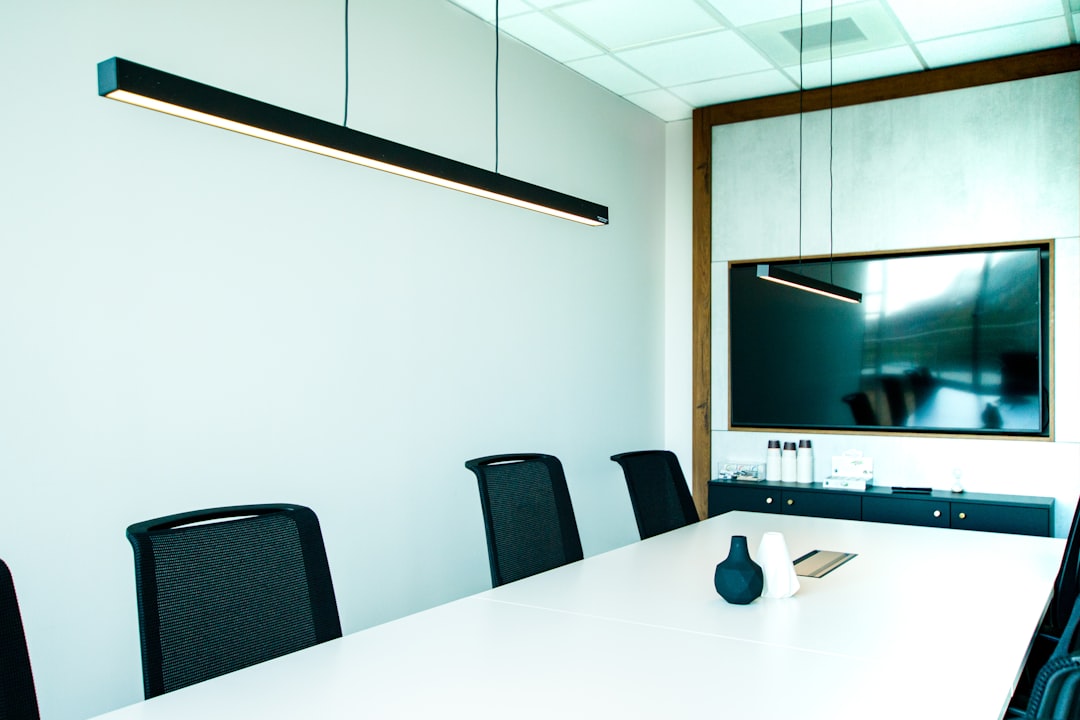
Wondering what AV room stands for? Learn what the term means, what equipment it includes, and how to set one up for your next Portland event.
If you've been handed a venue contract that references an "AV room" — or you're trying to figure out whether the space you booked actually includes what you need — it's a reasonable question to stop and ask. AV stands for audiovisual. An AV room is any dedicated space equipped to support audio and video functions during a presentation, meeting, or event. In practice, that definition covers a wide range of setups: a hotel breakout room with a ceiling projector and a single handheld mic, a corporate boardroom with integrated display panels and a conference phone, or a fully staged general session hall with line-array speakers and a 14-foot projection screen. The label tells you the room has AV capability. It doesn't tell you whether that capability is adequate for what you actually need.
What "AV Room" Actually Means in Practice
The term audiovisual dates to mid-20th century education, when classrooms began combining film projectors and audio playback to support instruction. Today the phrase has broadened considerably. An AV room in a corporate venue might mean a fixed LCD display, a HDMI input plate in the table, and a ceiling-mounted microphone array. At a hotel, it might mean aging equipment that hasn't been updated since 2015. At a conference center, it might mean a fully integrated system operated by an in-house technician.
What the designation does reliably signal: the room was designed to support presentations requiring both a visual display and amplified audio — as opposed to a raw event space that has neither. Beyond that, you should ask specific questions before you assume anything.
The Problem With Assuming "AV Room" Means Ready to Go
Most event planning friction around AV happens because planners treat the label as a guarantee. It isn't. Here are the specific gaps that surface most often:
Fixed equipment may not match your format. A ceiling projector built for a 30-person breakout won't produce a readable image for 120 attendees, even if the room can physically hold that many people. Throw distance, screen size, and lumen output are calibrated for a specific room configuration — not yours.
Microphone coverage is almost always underestimated. A single handheld microphone at the podium is standard in many venue AV rooms. It covers exactly one speaker standing in one spot. Panel discussions, audience Q&A, roving presenters, and hybrid meetings all require additional microphone infrastructure that the room almost certainly doesn't include.
Audio quality in the room was designed for the room's default layout. If you rearrange seating, add a riser, or extend the audience area, the speaker coverage zone shifts — and so does where the sound is inadequate.
What's Actually at Stake
An underpowered AV room doesn't just create minor inconvenience. If your keynote speaker's slides aren't readable past row four, attendees disengage. If panelists are passing a single microphone back and forth, the conversation loses momentum and your remote participants hear every fumble. For corporate meetings, that translates to a credibility problem for whoever organized the event. For conferences, it affects attendee satisfaction scores and the likelihood of repeat registration. The gap between what a venue's AV room provides and what your event actually requires is almost always wider than it looks on a walkthrough.
How to Fill the Gap With Rental Equipment
The practical fix is to treat the venue's existing AV infrastructure as a baseline — then rent what's missing. This is exactly the use case rental companies serve.
Projection and display. If the venue projector is underpowered for your audience size, a rental projector with appropriate lumen output and the correct screen size closes that gap cleanly. For rooms where a projector isn't the right fit, flat panel displays on rolling stands give you flexibility that fixed ceiling mounts don't.
Microphone coverage. A wireless handheld, a lavalier for a roving presenter, and two audience Q&A mics cover most meeting formats. These can be added to any venue AV room without permanent installation.
Speaker reinforcement. For rooms where the built-in speakers don't reach the back rows, portable PA systems and powered speakers can supplement the fixed system or replace it entirely.
All of this equipment can be delivered to Portland metro venues — including hotel properties in downtown Portland, Beaverton convention spaces, and Hillsboro corporate campuses — tested before arrival and set up before your first attendee walks in.
Frequently Asked Questions
Get the Right AV for Your Venue
If you've confirmed your venue has an AV room but aren't sure it covers what your event requires, contact EventGear PDX with your attendee count, room dimensions, and event format. We'll tell you exactly what's missing and have it delivered and ready before your event starts.