
Blog
- equipment
- event-planning
AV for a Fundraising Dinner or Small Gala
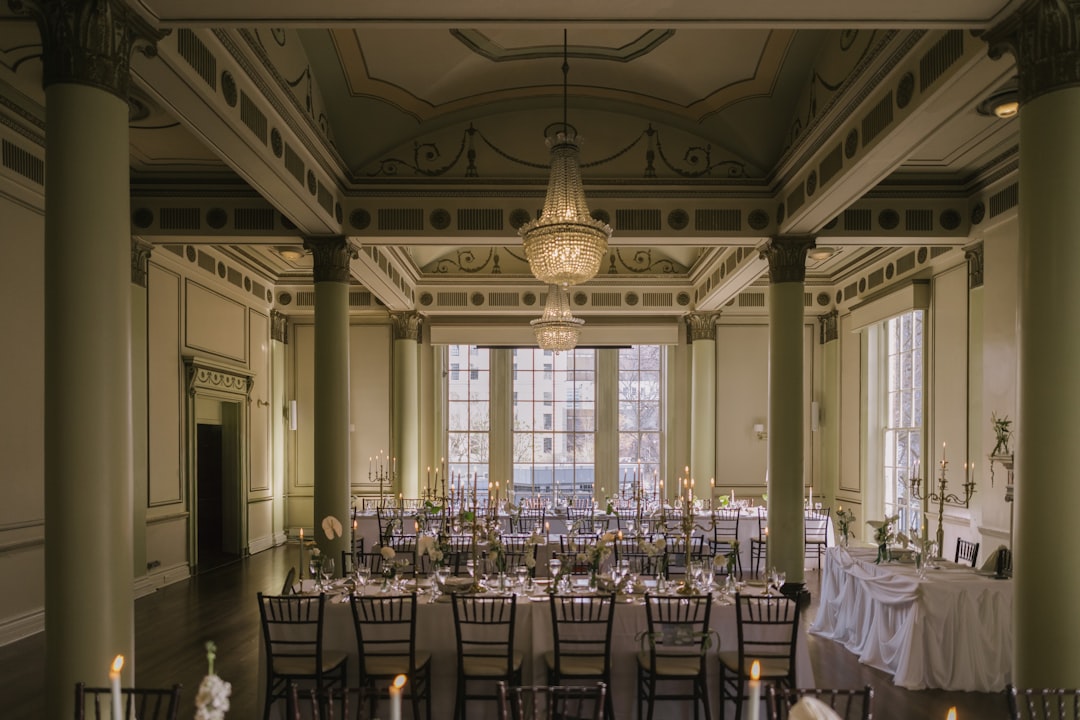
Sound and projection for a seated dinner of up to about 100 guests — where these events actually go wrong, and what to settle before the room fills.
A fundraising dinner is a harder room than a conference. The audience is seated at round tables facing each other rather than the front, cutlery and conversation set a noise floor that a meeting room never has, and the important moments — the welcome, the story, the ask — happen when people are mid-course and already talking. The equipment involved is modest. The planning is what decides whether the room hears the ask.
The Room Faces the Wrong Way
Rounds seat people comfortably and leave a third of them with their back to any screen. You can't rotate a dinner mid-service, so the decision belongs to the floor plan: where the speaking position goes, which wall carries the screen, and which tables end up turning their chairs for ten minutes.
A single screen at one end of a long room serves the near half well and the far half poorly. Two smaller screens along the room's length often work better than one large one at the front, and either way the screen has to sit high enough to clear centrepieces and standing guests.
Sound Has to Beat the Room, Not Fill It
Cutlery, glassware, service, and a hundred conversations are the competition. Volume is not the answer — intelligibility is, and that comes from putting speakers along the length of the room rather than pushing everything from the front.
Microphones follow the program: a handheld or lectern mic for the host, a lavalier for anyone who moves, and a second handheld for a speaker who appears from a table rather than the stage. Fundraising moments in particular tend to hand the microphone around, which is the point at which a single mic starts costing momentum.
The Moments That Need Planning
The welcome. Happens while people are still arriving and seating. Sound needs to be up and tested before the first guest walks in, not during the first course.
A speech from a table. Common at these events and routinely unplanned. If the founder, a beneficiary, or a donor speaks from where they're sitting, a microphone has to reach them.
The video. A short film mid-dinner is standard, and its audio is the thing most often forgotten: playing it through a laptop is fine in a meeting, inaudible at a dinner. It needs a proper feed into the PA and a level set for a noisy room.
The auction or the ask. The one moment where every word matters, and typically the point where the room is loudest.
What We Cover
For dinners and galas up to about 100 guests across the Portland metro: projection and screens, a PA sized for a seated room, wireless microphones, and hybrid support if part of the audience joins remotely. Every booking includes delivery, setup, testing with whoever is presenting, a technician on site for the whole evening, and strike afterwards.
We don't provide stage or decorative lighting, LED walls, staging, or DJ services — for a gala that wants those, they'll come from a production company or the venue, and we'll work alongside them.
Frequently Asked Questions
The Takeaway
A dinner is a room built for eating, borrowed for a program. Decide the speaking position and the screen with the floor plan, put speech reinforcement along the room rather than at the front, plan for the microphone that has to reach a table, and give the video a real audio path. Get those four right and the ask lands.