Blog
- event-planning
- tips
AV Stands For Audiovisual — Here's What That Actually Means for Your Event
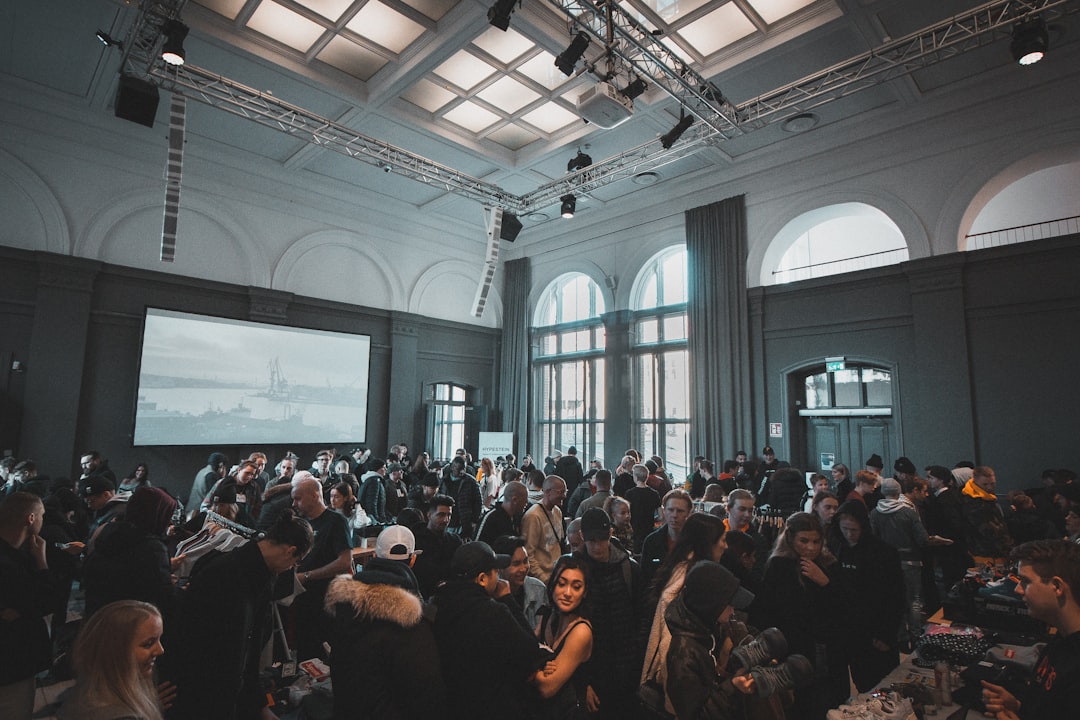
AV stands for audiovisual — but what that means for your event budget, setup, and success is more specific than the abbreviation suggests.
AV stands for audiovisual — two words that get combined into one abbreviation and then treated as if everyone already knows what they mean in practice. If you're planning a corporate meeting, a nonprofit gala, a school graduation, or a conference at a Portland hotel, someone on your vendor list will ask about your AV needs. Knowing what that question actually covers — speakers, microphones, projectors, screens, signal routing, and how all of it gets set up on the day — changes how you plan, how you budget, and how confident you'll feel walking into your event. This article breaks down what AV means in a real event context, where the common misunderstandings are, and what it takes to get the audio and visual components of an event right the first time.
What AV Stands For — and What It Covers in Practice
AV stands for audiovisual. In an event context, that covers any equipment used to deliver sound or images to an audience: PA systems, speakers, subwoofers, wireless microphones, lavalier kits, video projectors, projection screens, and the cables and signal processors that tie everything together.
The abbreviation gets used loosely. A hotel banquet coordinator might ask "do you have AV handled?" and mean only whether you have a projector and a screen. A conference organizer asking the same question might mean a full production setup with multiple audio zones, a confidence monitor, and a wireless handheld for audience Q&A. Neither is wrong — but they're describing very different scopes of work.
Understanding what falls under the AV umbrella helps you ask better questions of every vendor involved in your event, and avoid the gap between what you assumed was covered and what actually shows up on the day.
Where AV Planning Goes Wrong Before the Event Starts
The most common problem isn't that event planners don't know what AV stands for — it's that they treat it as a single line item rather than a set of interdependent systems.
Audio and video have to work together. A presenter with a wireless lavalier mic needs a receiver connected to the main PA. The PA needs to be sized for the room. The projector needs to be positioned and focused for the specific throw distance of your venue. If one element is underpowered, mismatched, or missing, the whole system underperforms.
A second problem: relying on a venue's "house AV" without confirming what that actually includes. Many Portland-area event venues list AV as an amenity, but the equipment may be outdated, poorly maintained, or insufficient for a presentation with video playback and a wireless mic running simultaneously. Discovering this on setup day leaves you with no good options.
What Happens When AV Is Treated as an Afterthought
A presenter whose voice doesn't carry to the back third of the room loses the audience before the second slide. A projector that can't compete with the ambient light in a windowed ballroom makes every chart and graphic unreadable. These aren't edge cases — they happen at well-organized events run by experienced people who simply didn't confirm the technical details early enough.
The downstream cost isn't just a poor audience experience in the moment. For corporate events, it reflects on the organizer and the presenting company. For nonprofits and schools, a technically failed event can undermine the credibility of the message. Getting AV right is risk management as much as it is logistics.
How Professional AV Rental Closes the Gap
Renting AV equipment from a local provider solves the specific problems above in ways that venue house systems typically cannot.
First, you control the inventory. A wireless microphone kit, a PA system sized for your room, and a high-lumen projector with the right lens for your throw distance can be matched to your venue's actual dimensions — not whatever happens to be installed in the building.
Second, equipment is tested before it arrives. At EventGear PDX, every item is inspected and function-checked prior to delivery. That eliminates the on-site discovery that a wireless receiver has a dead channel or a projector lamp is at end of life.
Third, local rental means flexibility. Same-day and next-day availability means that if your event scope changes — a keynote gets added, a breakout room needs its own sound — you can adjust without starting over with a national vendor. For events in Portland, Beaverton, Lake Oswego, or anywhere in the metro, on-time delivery and local technician support are logistical realities, not marketing language.
If you're coordinating the AV components yourself rather than hiring a full production company, renting individually specified equipment is usually the most cost-effective and reliable path.
Frequently Asked Questions
Plan Your AV Before You Finalize Anything Else
If you're organizing an event in the Portland metro and want to confirm what equipment your venue and program actually require, contact EventGear PDX with your date, location, and expected attendance. We'll recommend a specific equipment list — no guesswork, no upselling gear you don't need.